Rain all day, as we leave Port Fairy. Brief stop in Portland, visit the lighthouse. Portland named in the early 1800’s is the only natural deep water port between Adelaide and Melbourne.
The Gunditjmara were a settled people, living in small circular weather-proof stone huts about 1 metre (3 ft 3 in) high, grouped as villages, often around eel traps and aquaculture ponds. On just one hectare of Allambie Farm, archaeologists have discovered the remains of 160 house sites
By the early 19th century, whalers and sealers were working the treacherous waters of Bass Strait, and Portland Bay provided good shelter and fresh water, which enabled them to establish the first white settlement in the area. Sadly a dispute between whalers and natives over a beached whale in 1833, resulted in 20 natives massacred.
I have visited and stayed in Portland on many occasions, due to a fertilizer business I worked for. They had a manufacturing plant here.
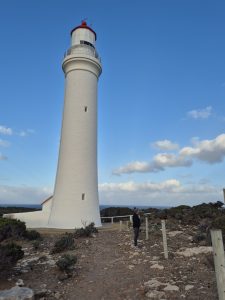 Cape Bridgewater lighthouse near Portland
 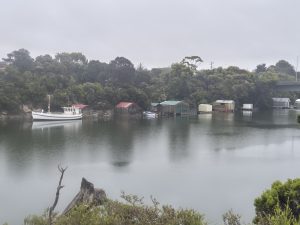 A cuppa in Nelson, on the border of South Australia
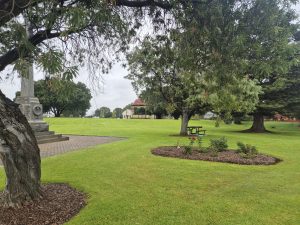
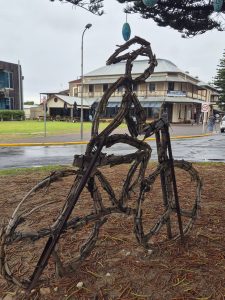
Still raining. time for lunch in Millicent
Beachport, SA. We camped here with the children in 1989, thought we would re-visit.
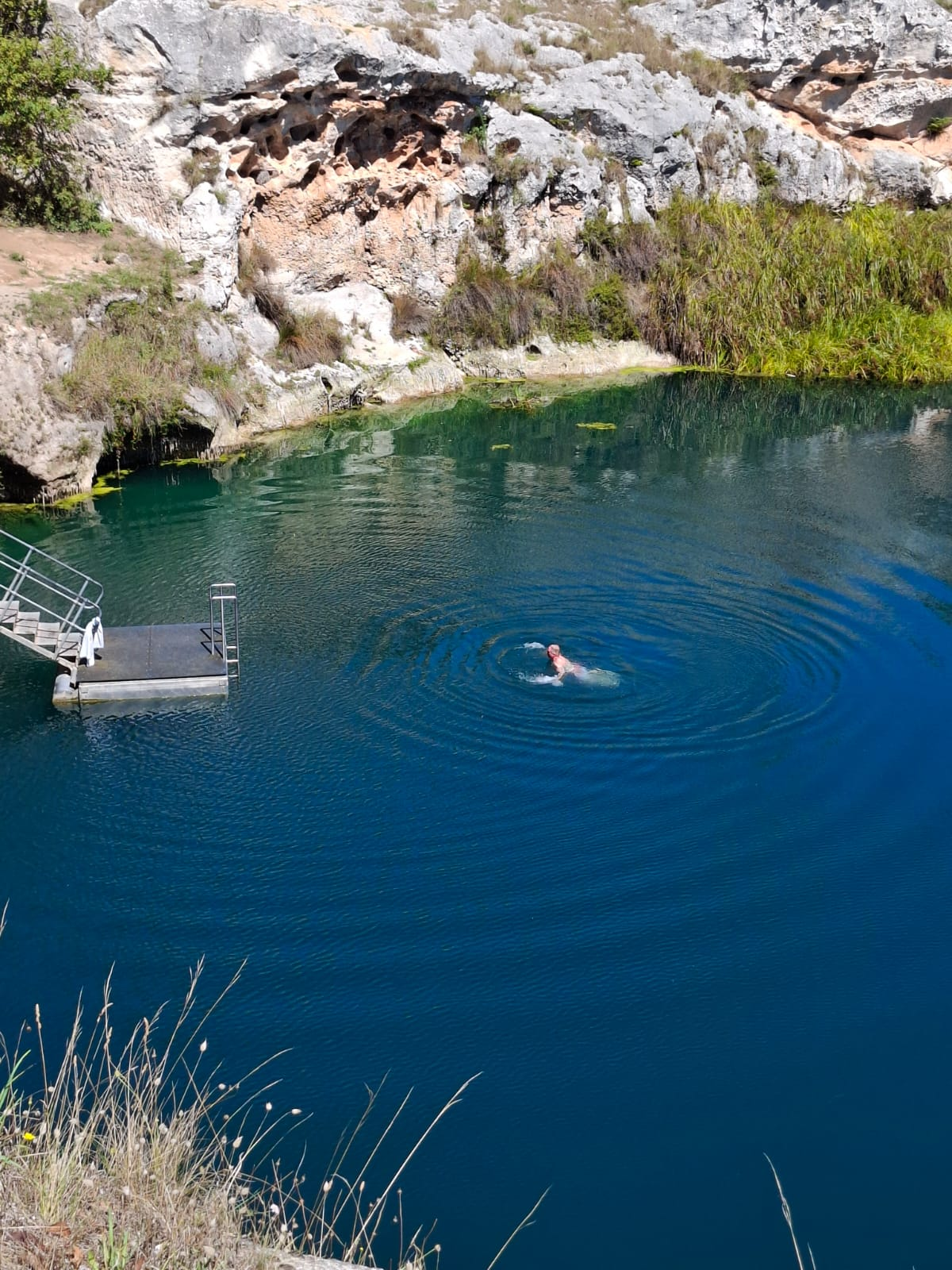
A swim in the Little Blue Lake, Mt Gambier anyone? A constant 14 deg C 40mtr deep.
Robe-SA
Robe is a town and fishing port located in the limestone coast in the south-eastern part of South Australia. The town’s distinctive combination of historical buildings, ocean, fishing fleets, lakes and dense bush attracts many tourists. Robe has a population of 1300, but swells to many thousands in the summer periods.
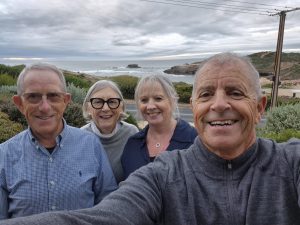
Our friends Prue and Peter, have a house here. It is the family home where Prue, spent most of her life, even though she was born in nearby Millicent.
I have known, Peter for 25 years, whom I met through the company we worked for. I have ridden (bicycle) extensively with, Peter, throughout Europe and Australia.
Prue, herself a prolific cyclist, compliments, Peter’s love of cycling.
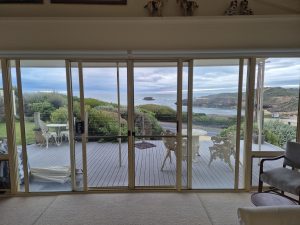
The house, and the view. The clear water along this coast are fabulous.
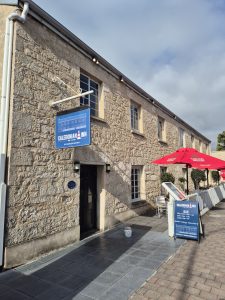
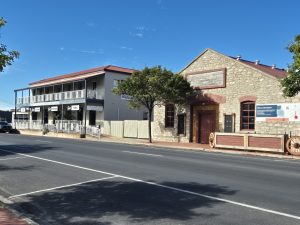
 The seafront and the Caledonian, built from SA Limestone.
During the gold rushes in Victoria in the 1850’s, the government of the Victorian Colony, introduced a landing tax of 10 pounds, to deter Chinese immigrants, which was more than the cost of the voyage. To bypass this tax, more than 16,000 Chinese, landed in Robe, and walked more than 320 klm to the goldfields in Victoria.
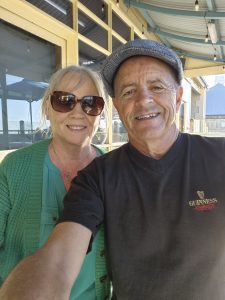
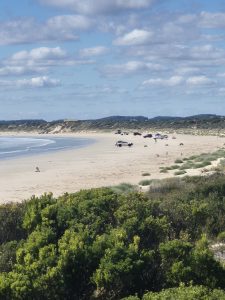
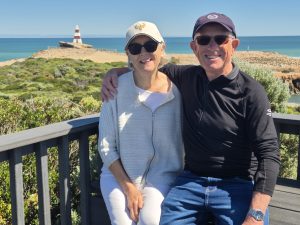
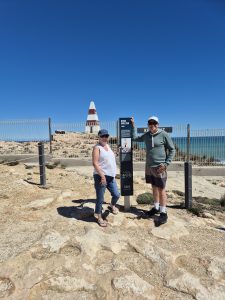
St Patricks Day, so we might be persuaded to have an ale, what do you think Prue, Peter? Did I hear a yes! Cars allowed on the beach, the young couple, and the old couple in front of the obelisk.
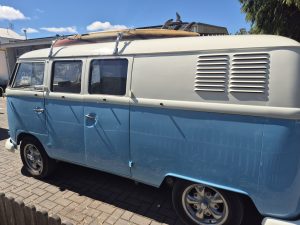
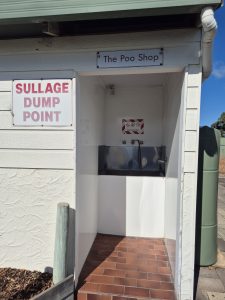
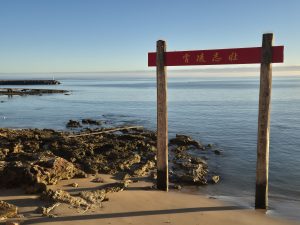
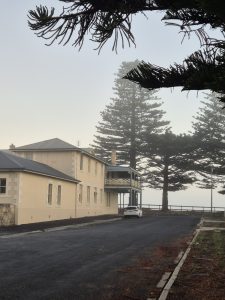

A 1970’s VW van, popular with young couples for camping and surfing. So that’s where you dump the sullage, in The Poo Shop. Acknowledgement to the Chinese influence, and an early morning run in the mist.